

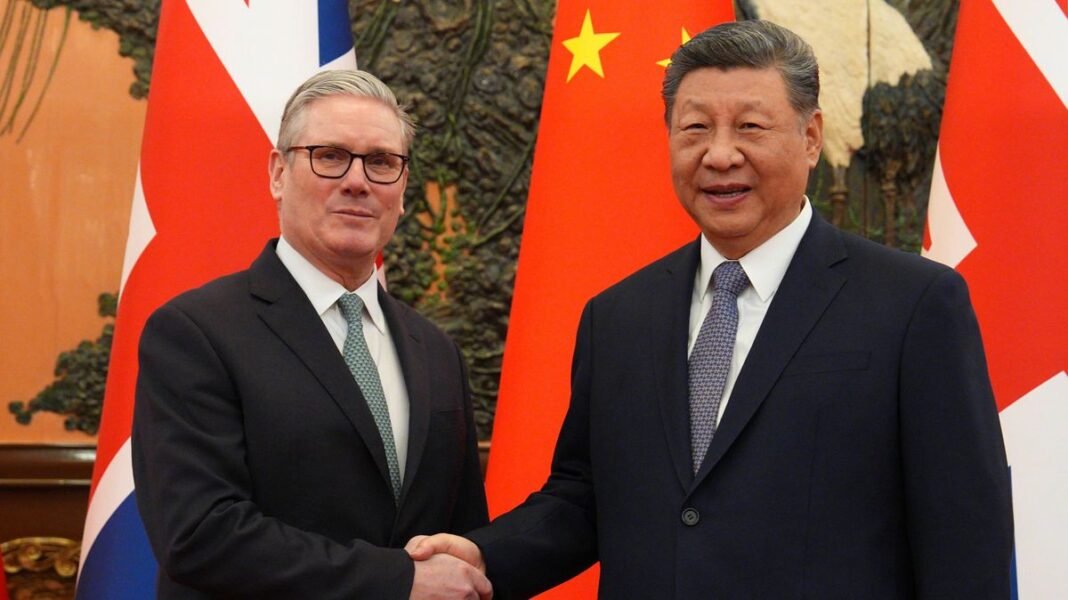

In Beijing, China’s President Xi and Keir Starmer engaged in a conversation that may have been akin to the following: Xi praised Starmer for his authoritarian leadership style, while Starmer expressed relief for preventing a potential defeat in Manchester. While Xi may not be familiar with specific British constituencies like Gorton and Denton, recent events have brought these areas to the forefront of British politics. Manchester’s Metro Mayor, Andy Burnham, poses a challenge to Starmer’s leadership, and failure to support him could jeopardize Starmer’s position.
Starmer’s decision to block Burnham from running in the election was met with criticism, as it was perceived as a move to protect his own leadership rather than genuine concern for a costly mayoral race. This decision further weakened Starmer’s image as a strong leader. The government’s recent u-turn on pub business rates added to the perception of incompetence and lack of direction.
Despite winning by a significant margin 20 months ago, Labour has experienced a decline in membership and support, with Starmer being labeled as one of the least popular PMs in recent history. The upcoming election in Gorton presents a crucial challenge for Labour, as the Reform candidate, Matthew Goodwin, holds extreme views that could resonate with disillusioned voters. Burnham’s working-class background and experience make him a more relatable figure to voters.
Labour’s failure to connect with voters and offer a clear vision has put them at risk of losing ground to parties like Reform and the Greens. Starmer’s reluctance to support Burnham in Gorton could signal a dangerous shift in voter sentiment towards more extreme political figures. This trend could potentially elevate Farage and the Greens’ Zack Polanski as more appealing alternatives to traditional party leaders.
The outcome of the Gorton election will not only impact the local constituency but also serve as a barometer of the political landscape in the UK. Starmer’s leadership faces a critical test, and the consequences of his decisions could have far-reaching implications for the future of British politics.