

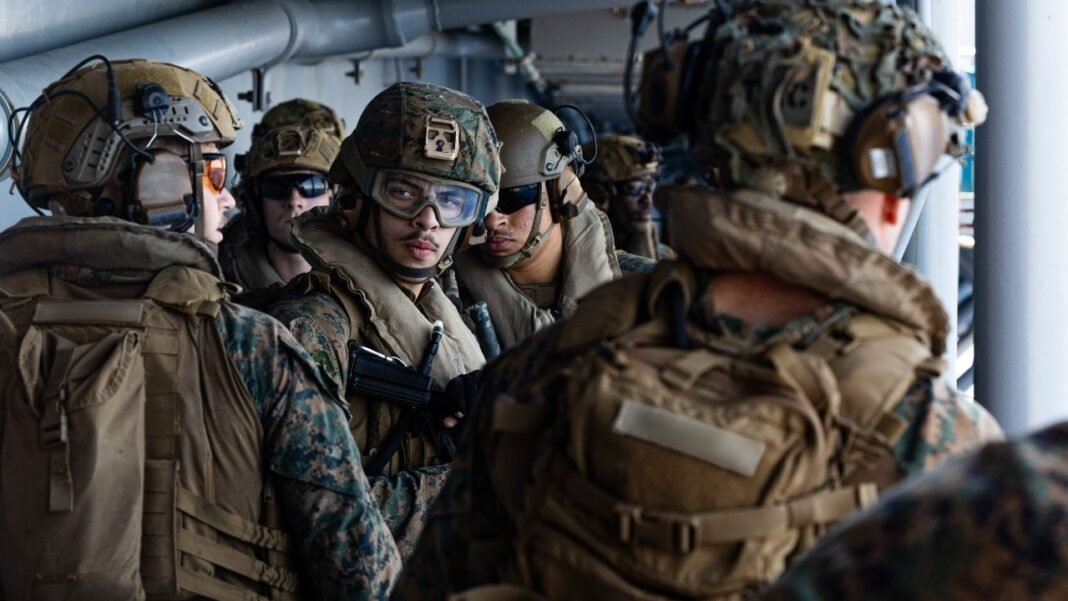

War tensions are escalating in the Middle East as the United States positions itself for potential ground operations in Iran. Tehran has issued a stark warning, declaring “Welcome to hell” on the front page of its state-run daily, Tehran Times, upon the arrival of US marines in the region. Despite the formidable military might of the US armada poised to target Iran’s energy facilities, experts suggest that the current situation appears to favor Iran.
The US boasts a vast array of resources including Marines, stealth fighters, aircraft carriers, nuclear submarines, precision-guided munitions, intelligence capabilities, and financial backing. However, observers believe that Iran holds the upper hand in the ongoing struggle for its existence.
President Donald Trump has opted to prolong the halt on energy strikes, but analysts argue that the US’ military strategy seems outdated. The prospect of a ground invasion, particularly targeting locations like Kharg Island, is viewed as a regressive approach reminiscent of past military blunders.
Former senior adviser to the Secretary of Defense under the Trump administration, Colonel Douglas McGregor (Retd), has criticized the US strategy, highlighting the aim of a devastating strike to destabilize the Iranian government and potentially seize control of key strategic positions in the Persian Gulf.
Iran’s military tactics have evolved to align with modern warfare practices, leveraging precision strikes, surveillance technologies, and advanced weaponry to counter potential ground offensives. McGregor and other experts believe that Iran’s strategic position is stronger in the current scenario.
In contrast, the US military’s historical campaigns in various conflicts have often encountered challenges in breaking the resolve of opposing nations. Concerns have been raised by experts such as MIT professor Caitlin Talmadge and Admiral James Stavridis regarding the risks and limited rewards associated with attempting to capture Kharg Island.
As the standoff persists, the global ramifications of prolonged energy disruptions are becoming increasingly significant. Analysts warn that continued attacks on energy infrastructure could lead to a surge in oil prices, potentially triggering a global economic crisis.
Iran’s demonstrated resilience in the face of conventional strikes and its ability to sustain asymmetric operations have underscored the complexities and risks involved in any prolonged military engagement. With each passing week of the conflict, the scales tip further in Iran’s favor, intensifying economic pressures and political divisions within the US over the course of action in Iran.