

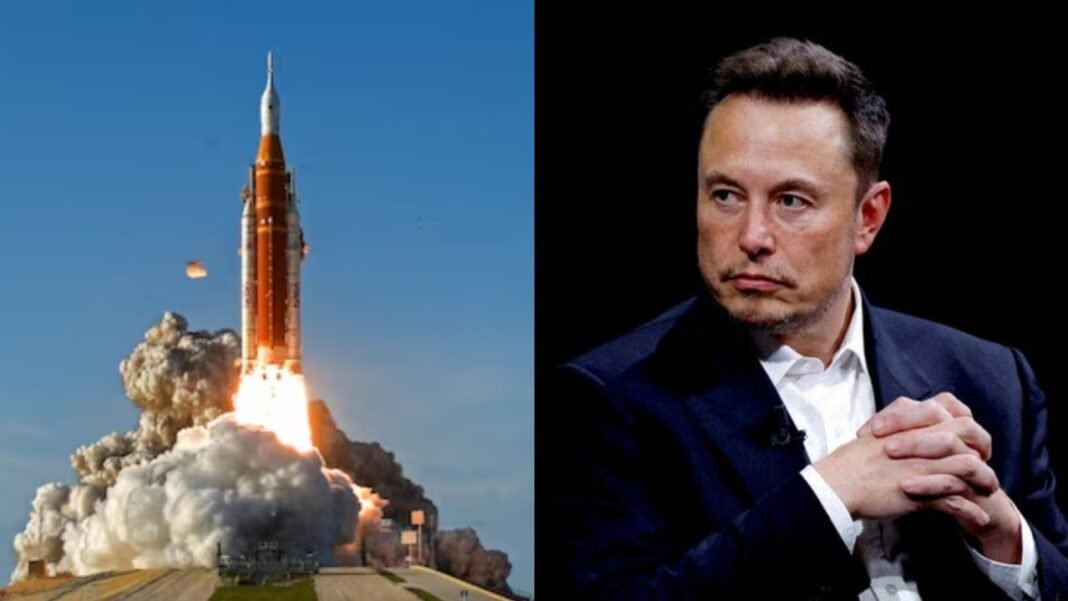

On April 1, 2026, Nasa initiated the Artemis II mission, embarking on a ten-day expedition to the Moon. This marks the first human-led lunar mission in more than five decades. The launch, held at the Nasa’s Kennedy Space Center in Cape Canaveral, Florida, garnered significant attention, with over 400,000 attendees and widespread social media coverage. Notable figures like Google CEO Sundar Pichai and actor Tom Hanks praised the mission, although SpaceX CEO Elon Musk remained notably silent despite his prominent advocacy for space exploration.
Musk, known for his fervor for space ventures and aspirations for a Martian colony, has pushed boundaries in rocket technology through SpaceX’s Falcon 9 and Falcon Heavy reusable rockets. The company is currently testing the Starship, set to become the most robust rocket ever constructed by humanity.
Despite Musk’s usual enthusiasm for space endeavors, he has refrained from publicly addressing Artemis II, sparking speculation online. An aerospace engineer named Christopher David suggested that Musk’s silence might be rooted in envy, referencing past predictions he made about SpaceX’s Starship program. David highlighted concerns about the Starship’s weight and reusability affecting its payload capacity in Low Earth Orbit.
Speculation continued online, with one user suggesting that Musk’s lack of engagement with the Artemis II mission could stem from jealousy. Another user criticized Musk’s qualifications and alleged credit-taking practices in scientific research.
While Musk has not directly commented on Artemis II, a single reference to the mission was found on his social media account, where he briefly acknowledged a comparison between chat responses from different AI entities.
In a twist of events, Nasa recently revoked a contract previously awarded to SpaceX for the Artemis III mission, citing delays in the Starship’s development. This decision may offer insight into Musk’s muted response to Artemis II, which relies on Nasa’s Space Launch System rocket.
Looking ahead, Nasa aims to land astronauts on the Moon in the Artemis IV mission scheduled for 2028, as part of its broader Artemis program. Musk had previously expressed enthusiasm for Starship’s potential payload capabilities beyond Nasa’s current projections for lunar missions.
The Artemis II mission signifies a significant milestone in space exploration, with ongoing discussions and speculations surrounding Elon Musk’s stance on Nasa’s lunar initiatives.