

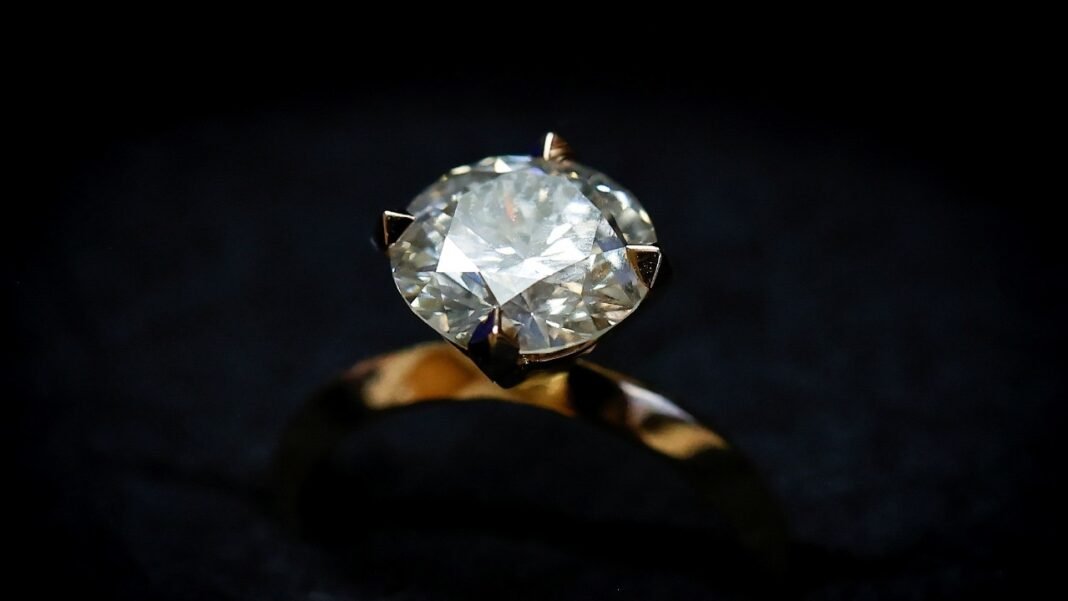

Traditionally associated with opulence, diamonds have been regarded as symbols of wealth and luxury. While many assume they maintain value similar to gold, the truth is that diamonds often experience a significant depreciation in worth upon resale, raising doubts about their initial high cost.
Recent statistics indicate that diamond prices have plummeted to their lowest levels in this century. Market data reveals that the diamond price index has declined from approximately 8,500 levels to almost 3,500. This decrease has occurred without any substantial global economic downturn or geopolitical upheaval, making the drop particularly notable.
When purchasing a diamond, buyers are not solely acquiring the gemstone itself. The price encompasses factors such as branding, marketing, margins for retailers, and production charges. Unlike gold, which boasts a clearly defined daily rate, diamonds lack a standardized benchmark price that consumers can easily monitor.
This lack of transparency in pricing results in significant variations in the costs at which similar diamonds are sold, depending on the seller. This disparity contributes to the elevated retail prices of diamonds.
THE REASON DIAMONDS FAIL TO PROVIDE RETURNS
The primary issue with diamonds lies in their resale value. Unlike gold, which can be readily sold at market-driven prices, diamonds lack a robust resale market.
When attempting to sell a diamond, sellers typically receive significantly lower prices than what they initially paid. In many instances, jewellers either decline to repurchase diamonds or offer rates well below the purchase price.
This discrepancy between buying and selling prices renders diamonds an unattractive investment choice.
LAB-CREATED DIAMONDS ALTERING THE MARKET LANDSCAPE
A major driver behind the price decline is the emergence of lab-grown diamonds.
These diamonds possess identical chemical, physical, and optical properties to natural diamonds. The key distinction lies in their production process. While natural diamonds form over millions of years, lab-grown diamonds can now be manufactured in approximately 14 hours.
The cost of producing lab-grown diamonds has dramatically decreased, by almost 90% since 2015. Presently, a lab-grown diamond can be created for under $300.
This disruption has led to lab-grown diamonds capturing about 45% of the engagement ring market in the US, underscoring the swift change in consumer preferences.
The proliferation of more affordable alternatives has weakened the pricing dominance of natural diamonds.
CHALLENGES TO THE SUPPLY AND PRICING MODEL
Diamond prices have historically been bolstered by controlled supply and robust marketing efforts, fostering a perception of rarity and enduring value.
However, the traditional model has been disrupted by lab-grown diamonds. When a similar product is available at a significantly lower cost, it raises doubts about the intrinsic value of natural diamonds.
Younger consumers are increasingly price-conscious and shifting away from heavy investments in traditional diamond jewelry.
In contrast, gold continues to serve as a reliable store of value. With prices hovering around $4,814, gold has surged over 100% in the past two years.
Gold boasts a transparent pricing system, high liquidity, and widespread market acceptance, making it a preferred choice for both adornment and investment purposes.
In contrast, diamonds lack these attributes, limiting their capacity