

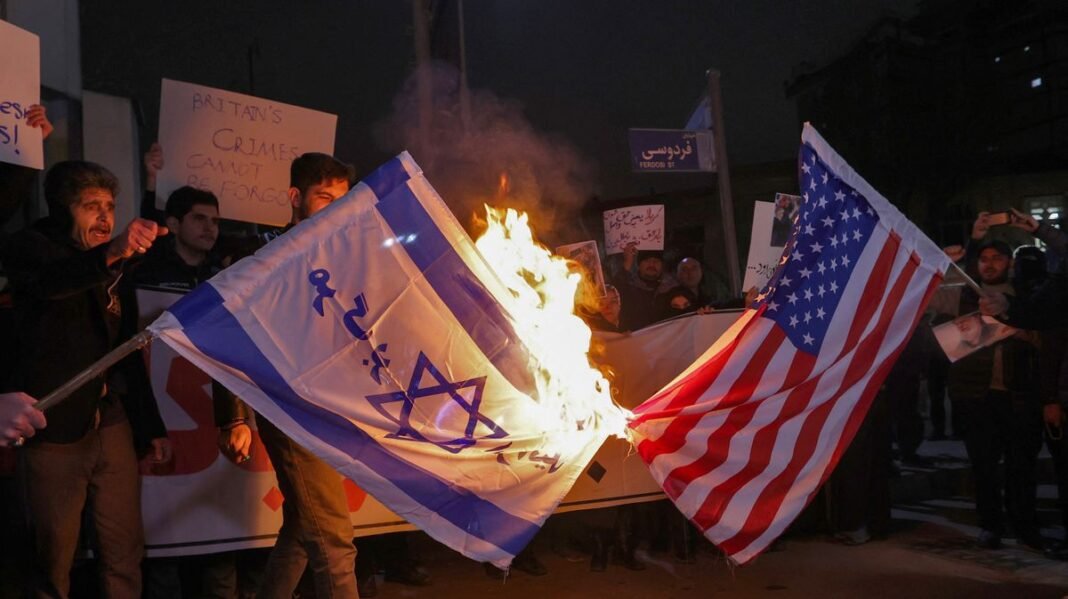

The United Kingdom and the United States have initiated the evacuation of essential staff from critical military bases in the Middle East due to concerns about potential hostilities in a potential conflict with Iran.
At the primary al-Udeid base in Qatar, which is utilized by British and American forces, air raid sirens were tested and key personnel were relocated to secure locations as a precautionary measure. This move follows President Donald Trump’s implied warning of strong action in response to any executions of protesters in Iran.
Simultaneously, the United Kingdom has withdrawn its diplomats from Iran, citing security assessments. The British Embassy in Tehran has been temporarily closed, with operations being conducted remotely. Additionally, Israeli forces are on high alert for possible retaliatory actions from Iran, anticipating potential repercussions if the US conducts strikes on Iranian military installations.
In anticipation of a crisis escalation, non-essential US personnel are being transferred from bases in Iraq to mitigate risks associated with potential attacks by pro-Iranian militias. Plans for a US military response involve the deployment of military assets, potentially including a Carrier strike force and aircraft, to the region.
The situation stems from President Trump’s warnings against the execution of protesters in Iran. While he received reports of no imminent executions, he emphasized vigilance regarding Iran’s actions. Concerns persist over the safety of individuals participating in anti-regime demonstrations, with reports of fatalities and arrests fueling fears of further violence.
Iran’s judiciary has indicated a swift judicial process for detained suspects despite international warnings. The escalating death toll resulting from the unrest has raised alarm globally, with parallels drawn to past tumultuous periods in Iranian history. The US administration has reiterated its stance on potential military intervention if civilian lives are threatened.
Efforts to avoid civilian casualties in any potential military action have been underscored, with likely targets being Iranian military installations and key figures within the regime. Iran has issued preemptive strike warnings, alleging external orchestration of the protests by the US and Israel.
As tensions persist, evacuations of personnel from strategic military bases have been advised, while mourning ceremonies for security force members killed in the protests have been observed. The ongoing unrest has left civilians fearful, with concerns about safety and the potential for further violence dominating public discourse.
In Tehran, eyewitness accounts highlight the escalation of violence during demonstrations, with authorities reportedly resorting to firearms. The lack of arms among protestors has raised concerns about disproportionate use of force by security forces, further fueling apprehensions within the community.
President Trump’s firm stance against violence in Iran echoes international sentiments, emphasizing the need for peaceful protests and condemning any acts of brutality. The evolving situation in Iran continues to draw global attention, with apprehensions over further unrest and implications for regional stability.