

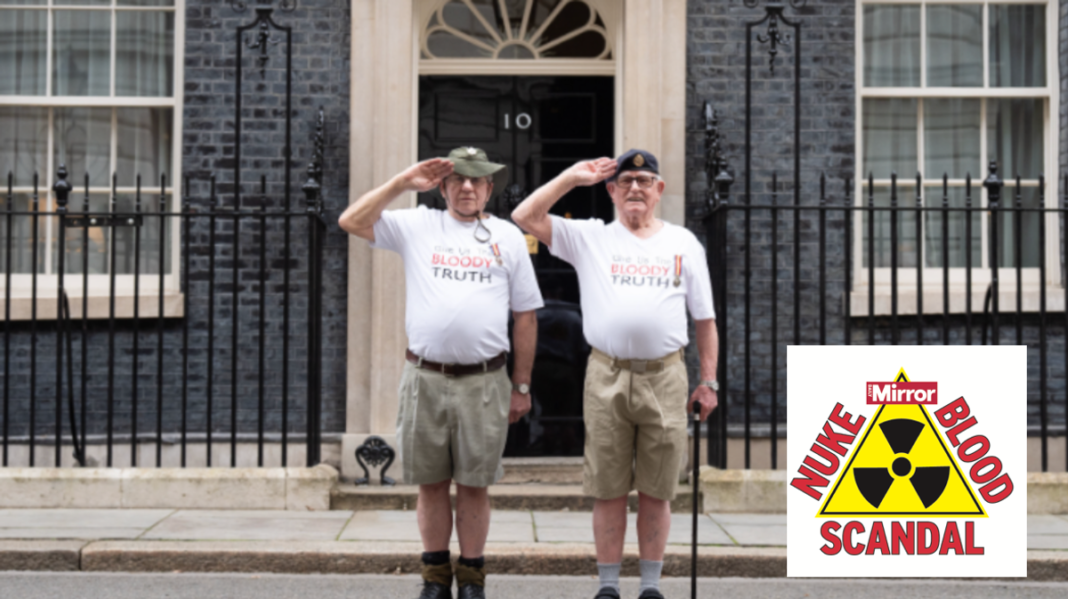

A government study looking into the causes of death among veterans who participated in Cold War nuclear bomb tests has come under scrutiny for intentionally omitting evidence of more than 1,000 troops receiving radiation doses. The study initially claimed no link between the tests and subsequent deaths, attributing any cancers to chance. However, a revised version of the research released 70 years later revealed a significant connection between service at the test sites and later mortality.
Campaigners are now urging the Ministry of Defence to discard the discredited study, which had conclusions altered by officials. They plan to address this issue with Prime Minister Keir Starmer in an upcoming meeting. Pressure group LABRATS highlighted the study’s flaws, stating that it cannot be used to conceal the government’s actions any longer.
The revelation stems from classified dose records known as “the Blue Books,” which were previously inaccessible to the public. These records showed that out of 14,290 servicemen involved in the trials, 6,053 had recorded radiation doses, but 1,031 of these doses were removed when the government initiated a cancer and mortality study in 1985. This action led to an increase in the total number of deaths examined but a reduction in the number of exposed veterans.
Former RAF technician John Folkes, who participated in the tests, recounted his experiences and subsequent health issues. Despite wearing radiation badges and following safety protocols, he now battles prostate cancer and post-traumatic stress disorder. Researchers claim that the removed doses were likely duplicates, but there is no clarity on whether they differed from those used in the final report.
In response to the discrepancies, a Ministry of Defence spokesperson defended the research process, stating that some troops were excluded due to untraceable medical records. They emphasized that the Blue Books were not definitive records and that extensive verification efforts were made to ensure data accuracy.