

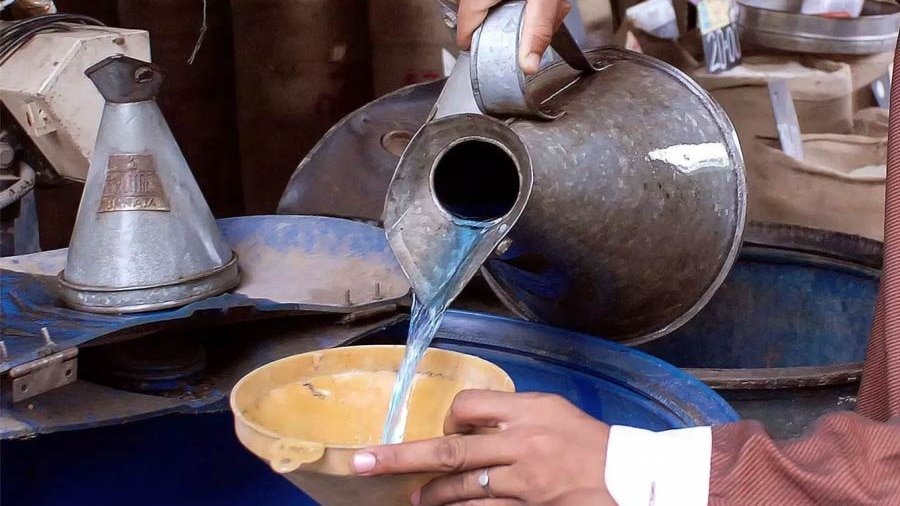

The government has eased regulations on petroleum safety and licensing to expand the distribution of kerosene, allowing its sale through specific petrol stations for a limited time, as per a Gazette notification released on March 29.
The Ministry of Petroleum and Natural Gas has authorized public sector oil companies to allocate Superior Kerosene Oil (SKO) under the Public Distribution System (PDS) in 21 states and Union Territories, including Delhi, Haryana, Uttar Pradesh, and Gujarat, where kerosene distribution had been phased out.
Under the new rules, selected petrol stations will be permitted to store and provide kerosene for household cooking and lighting purposes. Each station can hold up to 5,000 liters, with a maximum of two such outlets identified per district by state and Union Territory administrations.
The notification also exempts certain provisions of the Petroleum Rules, 2002, relaxing licensing requirements for dealers and transport vehicles handling kerosene. This decision aims to streamline storage, transportation, and last-mile delivery due to disruptions in global energy supplies caused by current geopolitical tensions.
Officials mentioned that this step was taken considering the ongoing global fuel crisis, ensuring access to essential energy sources for households. Oil companies are also allowed to stock kerosene at existing retail outlets to expedite distribution through the established fuel network.
All designated outlets are still subject to safety and operational guidelines from the Petroleum and Explosives Safety Organisation. These relaxations are now in effect and will be valid for 60 days or until further notice.
In a separate development, Defence Minister Rajnath Singh emphasized the importance of medium- to long-term readiness and prompt decision-making during the first meeting of the Informal Group of Ministers (IGoM) established to monitor the evolving West Asia crisis. The meeting, attended by senior ministers such as Nirmala Sitharaman, Kiren Rijiju, Hardeep Singh Puri, Manohar Lal Khattar, and J P Nadda, reviewed sector-specific challenges and existing policy measures.
The IGoM assessed risks related to energy supply, essential commodity availability, infrastructure resilience, and supply chains, urging a proactive and coordinated approach in response to the changing circumstances.