

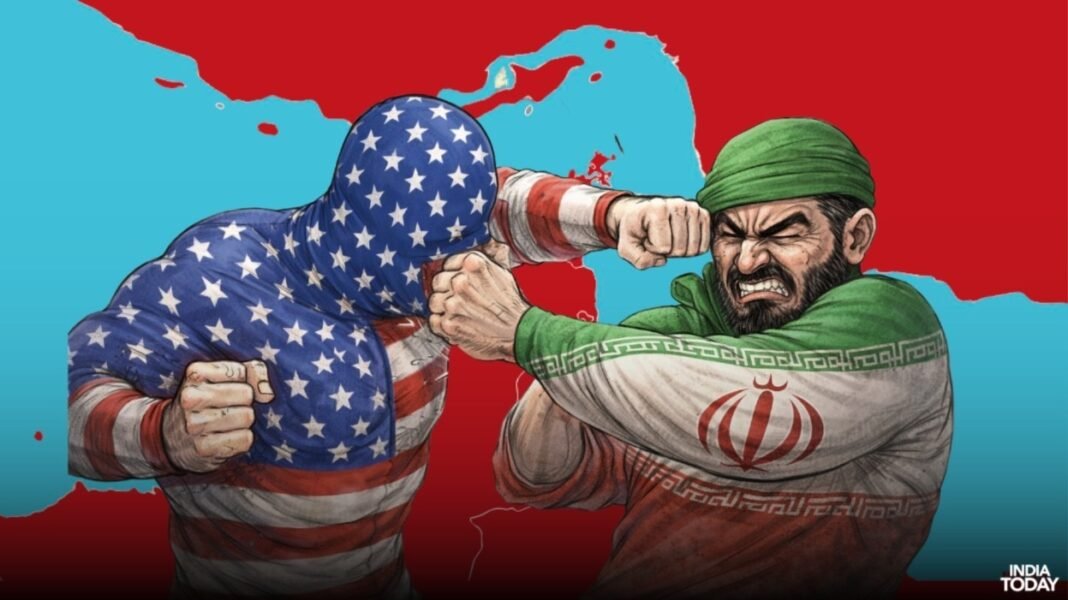

In the ongoing conflict in West Asia, the outcome is not as straightforward as a clear victory or defeat. Despite claims of superiority from the U.S., the situation is more nuanced. While President Trump asserts that Iran has been significantly weakened, recent decisions within the U.S. military leadership raise questions about potential setbacks.
Strategically, the U.S. has aimed to prevent Iran from acquiring nuclear weapons and curb its missile capabilities, alongside safeguarding its interests in the Gulf Cooperation Council region. However, the objective of regime change in Iran remains unaccomplished, despite targeted strikes on key leadership figures.
Regarding Iran’s military capabilities, the U.S. has effectively neutralized Iran’s air force and navy through extensive operations. The U.S. Central Command reports significant damage to Iranian naval assets and infrastructure, diminishing their operational effectiveness. Despite reduced activity, Iran’s missile and drone threat persists, although with decreased launch rates.
Iran’s ability to project power beyond its borders has resulted in disruptions to global energy infrastructure, particularly in the Strait of Hormuz region. While the U.S. and its allies have targeted key Iranian facilities, including nuclear sites, complete elimination of Iran’s nuclear program remains elusive.
Despite Iran’s efforts to retaliate and impose costs on the region, including attacks on energy facilities and military bases, the conflict has not led to a clear victor. Both sides have faced losses and challenges, with neither fully achieving their strategic goals.
The U.S. has struggled to rally support from allies, with limited military engagement from Gulf countries despite facing direct threats. As the conflict continues, the dynamics remain complex, with neither the U.S. nor Iran emerging as a definitive winner in the current scenario.