

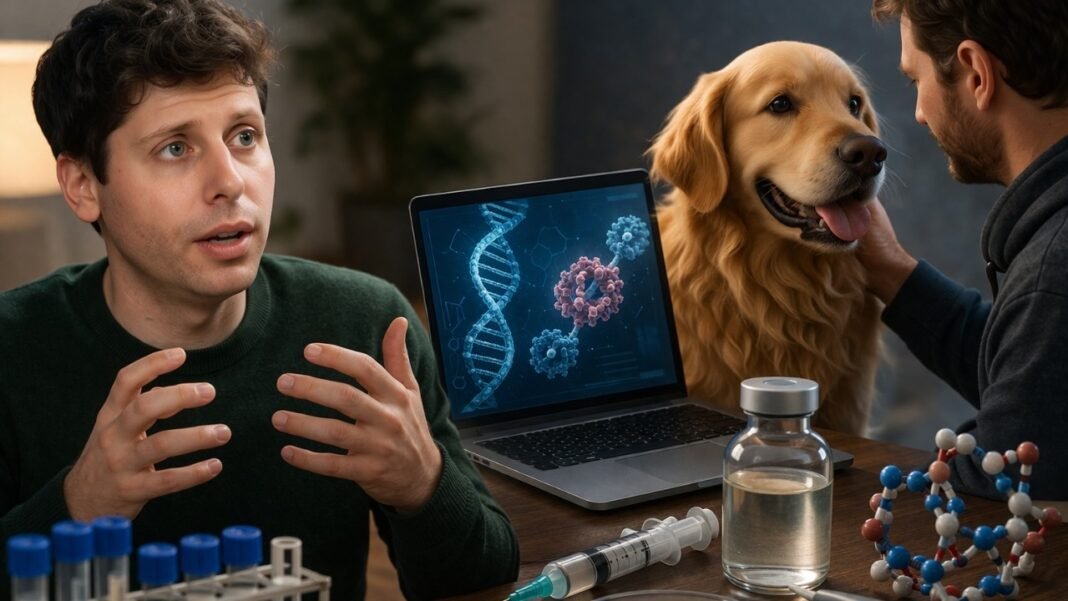

In a recent discussion on the future of artificial intelligence (AI), Sam Altman, the CEO of OpenAI, shared a remarkable anecdote that showcases the potential of AI technology. Altman recounted the story of an individual without a scientific or medical background who utilized ChatGPT to develop a personalized cancer vaccine for his pet dog. This real-life example highlights the increasing capabilities of AI tools and their transformative impact on problem-solving approaches.
The conversation delved into broader questions surrounding AI’s trajectory, such as its implications for employment, safety considerations, and societal changes. However, it was the narrative of the individual leveraging ChatGPT to craft a tailored mRNA vaccine for his dog, afflicted with cancer, that captured attention.
Altman described a meeting with a man who had traveled from Australia after utilizing ChatGPT to conceptualize and design a custom vaccine regimen for his ailing canine companion. Despite lacking a background in the medical or research fields, the man successfully deciphered the vaccine creation process, including identifying the necessary genetic sequence and comprehending the development procedure.
Furthermore, Altman highlighted that the individual did not merely theorize but took proactive steps to collaborate with academic experts and professionals to actualize the laboratory work required. This proactive engagement enabled the man to leverage ChatGPT comprehensively, achieving results that would typically necessitate the resources of an entire research institute.
Ultimately, Altman revealed that the dog’s life was saved as a direct outcome of this innovative AI-driven initiative. The man is now reportedly exploring avenues to extend this innovative approach to aid other pets grappling with similar health challenges.
While this narrative exemplifies the positive applications of AI, it also raises significant ethical concerns. Addressing potential misuse, Altman acknowledged the inherent risks associated with individuals exploiting similar AI tools to develop harmful biological substances. Recognizing the imperative for safety measures in AI development, Altman emphasized the necessity for “AI resilience,” advocating for proactive systems that can swiftly detect and respond to adverse developments, including disease outbreaks, treatment advancements, and global readiness protocols.