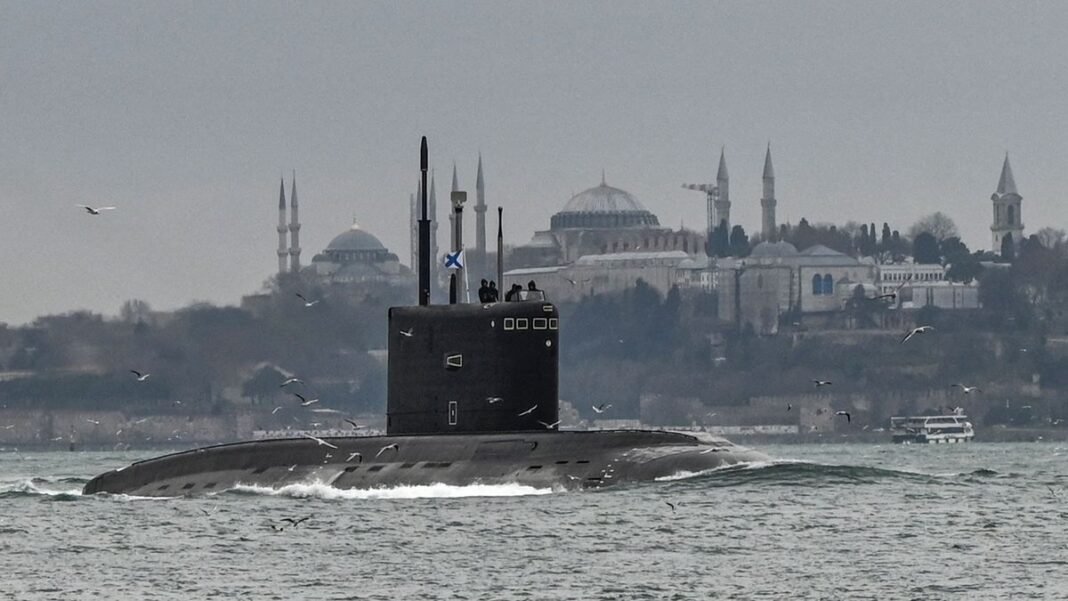

Ensuring the protection of the northern borders of Britain has become increasingly vital for the United Kingdom due to the escalating threat posed by Russia.
Russian submarines from the Kremlin are suspected to have been conducting more frequent covert activities in the area, particularly to gather intelligence on UK facilities and underwater cables.
Recent observations indicate an uptick in the presence of these submarines along the coast, serving the dual purpose of assessing their detectability and gauging the UK’s response capabilities.
However, the primary concern lies in the strategic significance of the underwater mapping by Russia, as the UK and Europe heavily rely on underwater cables connecting the continent with the US.
These vital cables span across Europe to the UK, Ireland, and onward to North America, facilitating millions of financial transactions and secure communications.
In times of conflict, the potential sabotage of these cables, either by destruction or through specialized commando units like Russia’s Naval Spetsnaz, could have catastrophic consequences.
The Naval Spetsnaz have reportedly trained in techniques such as submarine insertion and cable sabotage, particularly targeting the UK.
Furthermore, Russia is suspected of developing destructive “domesday bombs” capable of generating tsunami-like waves through underwater detonations along an enemy coastline.
These weapons could be strategically positioned off the coast, primed, and remotely activated during wartime, although the extent of their development remains undisclosed.
Russia’s covert underwater operations, managed through its clandestine submarine fleet and specialized naval forces, represent a highly classified aspect of the Kremlin’s military strategy.
Additionally, the access to the North Atlantic is gaining significance for international trade due to climate change-induced maritime passages opening new economic opportunities between countries.
These passages are anticipated to expand in the future, turning the North Atlantic into a pivotal route for both trade and military activities, a development unprecedented in modern history.
Securing these maritime routes has elevated the importance of the strategic agreement between the UK and Norway, essential for safeguarding the UK’s national security and global influence.
As a longstanding NATO member, Norway’s strong military ties with the UK, including joint training with Royal Marines Commandos in challenging Scandinavian terrains, further enhance mutual security measures.
Amidst evolving threats, the UK’s Type-26 frigates, equipped with advanced anti-submarine capabilities and versatile warfare systems, play a crucial role in detecting and countering Russia’s submarine activities in the region.