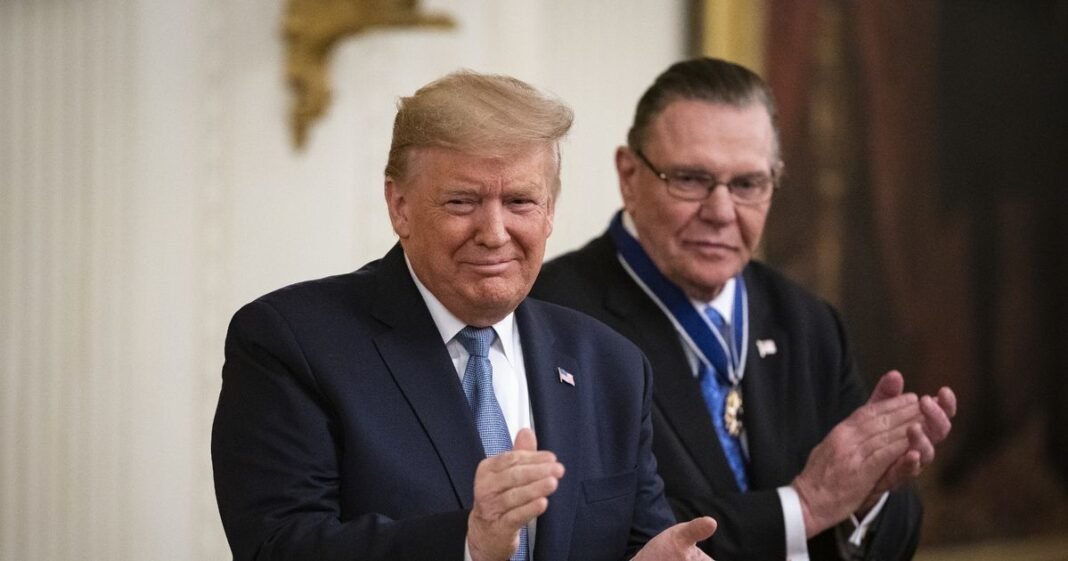

The motivations behind President Donald Trump’s interest in Greenland have been brought to light by a retired US army general, who is known to offer military advice to the president. Amid escalating tensions, the general, Jack Keane, suggests that the president’s recent considerations regarding Greenland are more strategic than they appear.
The White House has hinted at exploring various options, including the potential use of military force, to acquire Greenland. However, General Keane dismisses the notion that Trump genuinely intends to physically seize control of the island. According to Keane, the military-related statements are part of a larger negotiation tactic aimed at pressuring the Danish government into a security agreement with the United States.
In a recent podcast interview, Keane explained that the president’s approach involves using intimidation and threats as leverage to facilitate a future deal between the US and Greenland. He emphasized that Trump’s ultimate goal is to reach a beneficial agreement rather than pursue military conquest.
Secretary of State Marco Rubio is scheduled to visit Denmark to discuss potential solutions, including a proposal to purchase the 836,330-square-mile island located approximately 2,000 miles from the US coast. Despite Trump’s determination to secure Greenland’s resources, critics, including senior Republican senator Mitch McConnell, have condemned the administration’s aggressive negotiation tactics.
Keane, a former vice-chief of staff in the US Army, disclosed that he declined offers to serve as Trump’s defense secretary but opted to provide informal advice on defense matters. He cautioned against any unilateral military action to seize Greenland, highlighting the legal and ethical implications of such a move.
The unfolding situation has sparked debates on international law and the use of force in diplomacy. While some commentators, like Ben Shapiro, advocate for a more assertive approach, others, such as Homeland Security Adviser Stephen Miller, emphasize the importance of strength and power in global affairs.
Despite Trump’s belief that the US should control Greenland, NATO leaders and world figures have expressed concerns over the potential consequences of any hostile actions towards a NATO member. Danish Prime Minister Mette Frederiksen warned that an American attack on a NATO ally would jeopardize the foundations of international security and alliances.
Various world leaders, including UK Prime Minister Keir Starmer, have emphasized that decisions regarding Greenland’s future should be made by Denmark and the Greenlandic people. The island, with its 57,000 inhabitants, has maintained a degree of autonomy under Danish oversight, with the US Space Force operating a base on the island.
At Reach and our affiliated entities, we and our partners utilize data from cookies and other sources to enhance user experience, analyze site usage, and provide personalized ads. Users can manage their data preferences by adjusting settings on the website. By using our services, individuals agree to our use of cookies as outlined in our Privacy Notice and Terms and Conditions.