
In 1925, a rescue mission turned tragic when a man named William Floyd Collins became trapped in a cave and faced a slow and harrowing demise.
Floyd Collins, a renowned explorer, ventured into Sand Cave in Kentucky with only a kerosene lamp. Known for commercializing caves, Collins had previously discovered the Great Crystal Cave, now part of Mammoth Cave National Park.
While widening a narrow passage in Sand Cave, Collins’ lamp dimmed, prompting his decision to retreat. Unfortunately, a rock dislodged, trapping his ankle and leaving him contorted in a precarious position. It took a day for his absence to be noticed, leading to a rescue attempt initiated by a young boy who communicated with Collins.
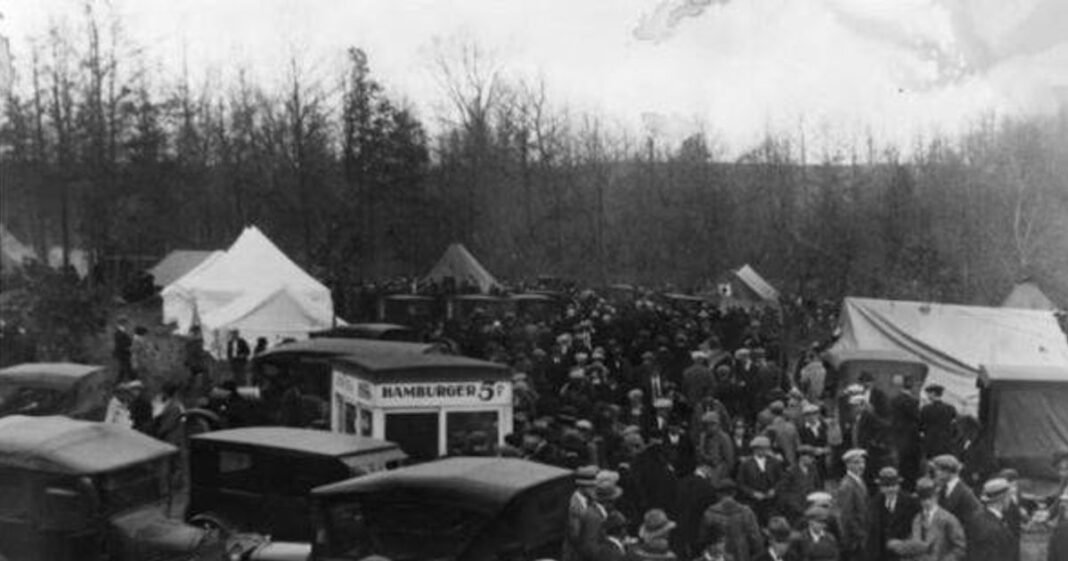
Despite the challenges, Collins remained cooperative and provided crucial information to rescuers. Various strategies were employed, including attempting to pull him out with a harness and chipping away at the trapped rock. The rescue efforts attracted national attention, with a surge of volunteers, reporters, and onlookers converging at the site.
Tragically, after five days, a cave-in blocked access to Collins, worsening his condition. As days passed, his voice grew faint, and efforts to reach him were hindered by adverse weather conditions. When miners finally reached him, Collins was discovered lifeless, having succumbed to his ordeal days earlier.
Collins’ body was left in the cave due to safety concerns and was later stolen and displayed in a glass coffin. Decades later, in 1989, he was laid to rest near the cave, leaving a legacy that inspired various forms of media. William Burke “Skeets” Miller’s Pulitzer Prize-winning interview with Collins remains a significant part of his story.