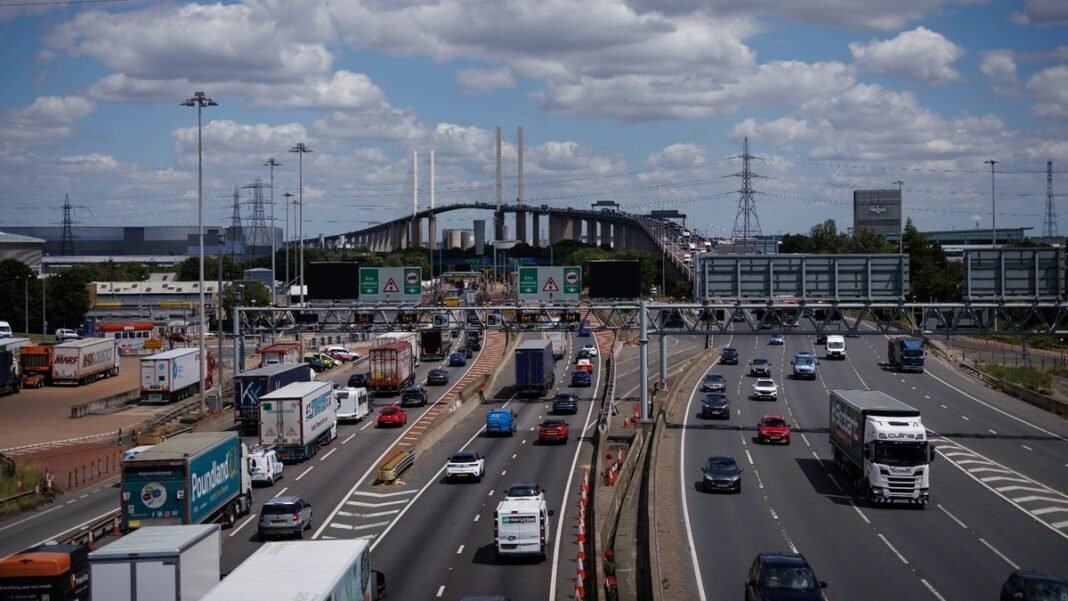

Drivers have lost over £3.6 million in unused Dart Charge payments over the past two years, with the majority of funds being retained by the Government. According to a recent Freedom of Information request, there were £1,812,379 in unused Dart Charge payments in the 2023/24 fiscal year, in addition to £1,790,559 from the previous year, totaling £3,602,938 in unused payments.
The Department for Transport (DfT) disclosed that the “vast majority” of these expired payments are not refunded and are thus retained by the Government. Dart Charge payments, which cost £3.50 each way and are utilized by motorists to cross the Dartford Crossing between Essex and Kent, remain valid for 12 months before expiration.
Drivers have the option to request a refund for Dart Charges within the 12-month expiration window. For drivers with dormant Dart Charge accounts, any remaining funds are reimbursed back to the account holder using the initial payment details. The Dartford Crossing sees up to 180,000 vehicles passing through daily.
A DfT spokesperson mentioned that all Dart Charge revenue is directed to the DfT and allocated to transportation projects benefiting individuals in Essex and Kent, such as the Lower Thames Crossing. The Mirror has reached out to the DfT for further comments. AA president Edmund King highlighted the history of Dartford Crossing tolls and the government’s decision to continue charges beyond the original agreement.
The Government recently raised the Dart Charge in September 2025, marking the first increase since 2014. This move coincides with the approval of the Lower Thames Crossing project, aimed at alleviating congestion at the Dartford Crossing. The new crossing will link the A2 and M2 in Kent to the A13 and M25 in Essex through a 2.6-mile tunnel under the Thames, set to become the UK’s longest road tunnel.
Development on the Lower Thames Crossing project has been ongoing since 2009, with over £800 million of taxpayers’ money invested in planning.