

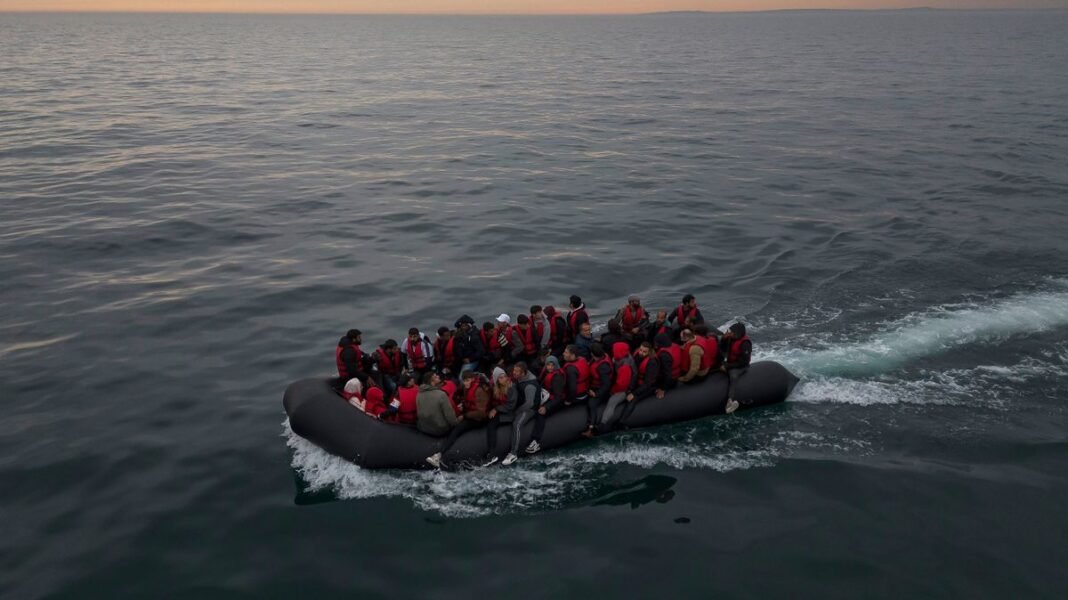

UK officials express satisfaction as Germany approves significant new legislation that imposes 10-year prison sentences on individuals involved in the smuggling of small boats.
Under the new law, individuals responsible for storing small boats and engines will now face extended periods of incarceration for the first time. This legislative advancement addresses a loophole post-Brexit that previously hindered German authorities from taking action against human traffickers transporting migrants to the UK.
The implementation of the new law is scheduled for the end of this year, and it includes enhanced cooperation in information sharing between the UK and Germany.
Following extensive negotiations between the two nations, this legal amendment aims to resolve a complex legal issue affecting the UK due to Brexit. Previously, German law did not criminalize assisting in smuggling people to the UK since it was considered a third country outside the EU. Criminal networks have been known to store engines in Germany before transferring them to northern France for perilous Channel crossings.
Foreign Secretary Yvette Cooper emphasized the importance of international cooperation in combating criminal smuggling networks that operate across borders. She praised the close partnership between the UK and Germany in addressing illegal migration and organized immigration crime, highlighting the need for strengthened border security through international collaboration.
Home Secretary Shabana Mahmood commended the joint efforts with German counterparts to crackdown on criminal gangs involved in the illegal migration trade. She acknowledged Minister Alexander Dobrindt for Germany’s robust cooperation with the UK in tackling this issue and affirmed the government’s commitment to enhancing border control measures and deterring illegal immigration.
In July, Keir Starmer and Chancellor Friedrich Merz signed the Kensington Treaty, marking a significant agreement between the UK and Germany since World War Two. The treaty outlines collaborative efforts on various issues, including irregular migration.
Recent operations led to the arrest of a suspected high-ranking member of a smuggling gang from Syria in Manchester, following a warrant issued by Germany in March. The Director of Intelligence at the National Crime Agency, Adrian Matthews, welcomed Germany’s legislative changes, emphasizing the importance of these measures in combating the small boats threat and disrupting organized crime groups operating from the continent.