

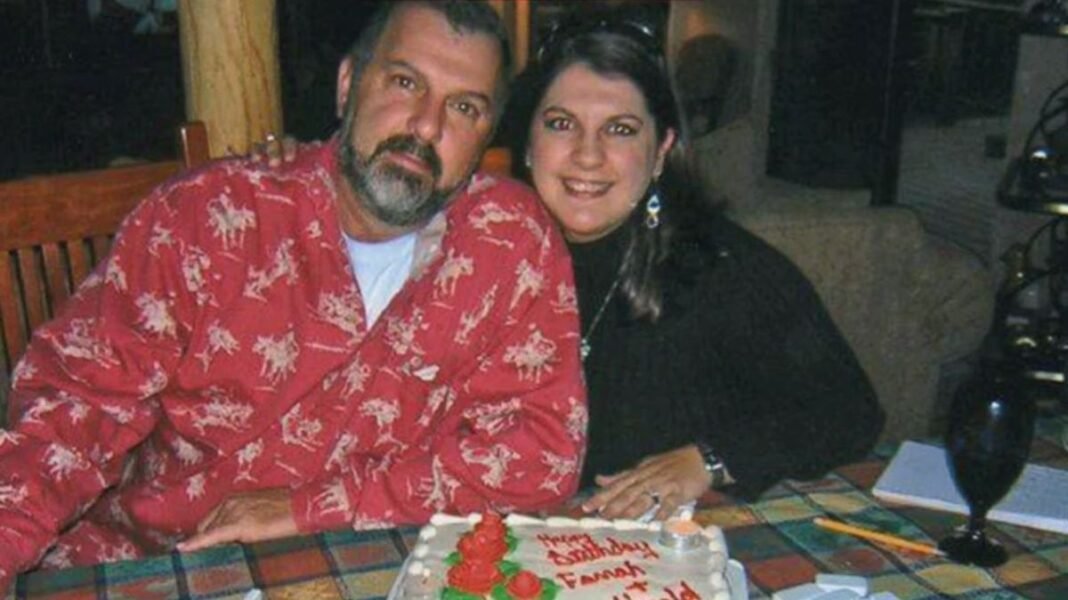

A woman recently shared the shocking experience of receiving a call from law enforcement informing her that they had discovered her father’s head in a warehouse among more than 100 other bodies, despite her belief that he had donated his body to science.
Farrah Fasold’s father, Harrold Dillard, passed away from cancer at 56 in 2009. Before his death, a company named BioCare approached him while he was in hospice, asking if he would donate his remains for doctors to practice knee replacement surgery on.
Describing her father’s willingness to donate as a selfless act, Farrah recalled how the family was assured that any unused parts would be cremated, and his ashes would be returned at no cost.
Shortly after his passing on Christmas Eve, his body was collected from the hospice. Months later, Farrah was devastated to learn that the police had found his head.
Expressing her distress, she emphasized that her family would not have agreed to the donation if they had known about the potential commercialization of body parts. The detective revealed that the bodies had been dismembered with a coarse cutting instrument, suggesting foul play by a company that profits from body parts rather than honoring the donation agreement.
Farrah expressed her belief that her father’s body had been mishandled, contrary to the promised respect. She vividly described her nightmares and insomnia due to the haunting images of body parts she associated with her father’s ordeal.
The incident sheds light on the practice known as “body brokering,” where companies act as intermediaries between donors and medical institutions, often prioritizing profit over ethical treatment of remains.
Many Americans unknowingly contribute their bodies to a commercialized system rather than purely for scientific advancement, highlighting the lack of regulation in the industry. Unlike the strictly regulated organ transplant sector, the trade in cadavers and body parts for research or educational purposes operates in a legal gray area.
The absence of comprehensive oversight allows unqualified individuals to handle and trade human body parts, raising concerns similar to historical issues of grave-robbing.
Experts caution that the current situation resembles a lawless environment, with widespread exploitation akin to practices of grave robbers from centuries past. Angela McArthur, a leading figure in body donation programs, warns of the urgent need for stricter regulations to prevent further exploitation of donors and their families.