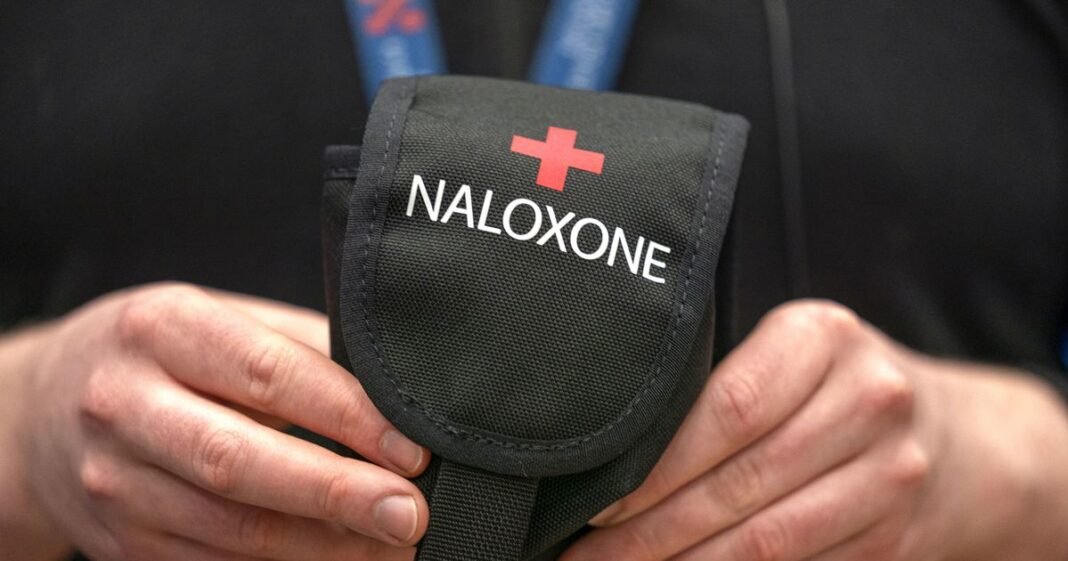

The government has revealed plans to enhance the availability of a life-saving medication for drug overdoses in homeless shelters and for the general public.
Officials will seek input on the distribution of naloxone to hostels, day centers, and facilities catering to individuals facing rough sleeping or homelessness. Naloxone, a prescription medicine, can temporarily reverse opioid overdoses, providing crucial time for emergency treatment to be administered.
Additionally, ministers will explore options to supply naloxone to emergency personnel at organizations such as Border Force and the National Crime Agency. They will also investigate innovative methods for accessing naloxone, including the installation of accessible emergency boxes – akin to defibrillator cabinets – in city centers and near entertainment venues.
Health minister Karin Smyth emphasized the importance of naloxone, stating, “Every drug fatality is preventable. Naloxone is a safe and effective remedy that can counteract an opioid overdose, offering individuals the opportunity to seek treatment and rebuild their lives.”
The government recently expanded the availability of take-home naloxone to emergency service professionals like police officers, paramedics, and probation workers. The move aims to save more lives, with support from homeless charities, as part of the government’s £3.4 billion allocation for drug and alcohol treatment services.
According to DHSC, drug-related deaths have doubled since 2012, with a record 5,448 fatalities in England and Wales last year. Deaths linked to nitazenes, a synthetic opioid, spiked significantly from 25 in 2023 to 180 in 2024.
Sean Palmer, Executive Director of Strategy and Transformation at St Mungo’s, expressed support for the widened access to naloxone, highlighting its importance in aiding individuals experiencing homelessness who are using opioids. Palmer stressed the critical role naloxone plays in saving lives and assisting individuals in breaking free from homelessness.
He further noted the rise in opioid use and associated risks, emphasizing the prevalence of naloxone within their services and the life-saving actions taken by their teams. Palmer recognized substance use as a coping mechanism for individuals facing complex physical and mental trauma, often intertwined with homelessness.